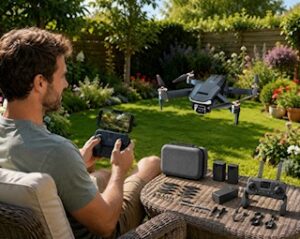
Compare Adult Drones
Pros & Cons
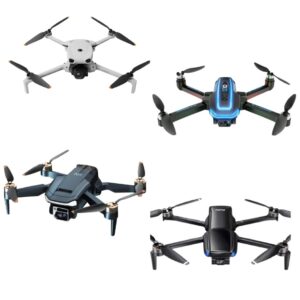
- Stabilised Ultra-HD Imaging: Drones in this tier utilise 3-axis mechanical gimbals to counteract wind buffer, capturing smooth 4K video and high-resolution JPEG or RAW still photos.
- Smart Safety Restraints: These units rely heavily on GPS/GLONASS satellite positioning to hover perfectly in place when you let go of the controls and to automatically fly back to their launch pad if the signal drops.
- Intelligent Camera Trajectories: Standard software includes pre-programmed flight paths (like orbits, spirals, or rocket ascents) that film cinematic sweeps at the touch of a button.
Compact Folding Architecture: The arms and propeller blades collapse inward, allowing the entire fuselage to slip into a jacket pocket or a small backpack compartment easily.
- Frictionless Legal Flying: Because they fall under the sub-250g category, you can legally fly them in much closer proximity to people and built-up areas than industrial rigs, requiring only a cheap, basic Operator ID from the Civil Aviation Authority (CAA).
- Instant Creative Upgrade: They turn ordinary family holidays, coastal walks, and outdoor hobbies into spectacular cinematic memories from perspectives that are impossible to achieve from the ground.
- Low Financial Anxiety: Crashing or losing a £300 drone is painful, but it lacks the financially devastating stakes of damaging a £3,000 professional cinematic platform.
Pros
No pilot flyer tests required due to the ultra-lightweight sub-250g builds. The assertion that no pilot flyer tests are required for ultra-lightweight sub-250g builds highlights the most significant regulatory exemption within the Civil Aviation Authority (CAA) framework. In the United Kingdom, sliding your aircraft into this featherweight micro-category completely shields you from the theoretical examinations’ mandatory for heavier machinery. An aircraft scaling under 249 grams lacks the physical mass to cause severe structural damage or catastrophic injury in the event of a mechanical failure.
Impressive battery efficiency matching professional models with 30+ minute flight times. The engineering reality behind this matche professional models with 30+ minute flight times represents a monumental shift in consumer aerodynamics. Historically, achieving half an hour of sustained flight was a luxury reserved exclusively for heavy, industrial-grade quadcopters carrying massive power cells. Today, sub-250g consumer aircraft match these endurance metrics by balancing highly optimized hardware with sophisticated chemical power management.
Highly intuitive mobile apps that let you edit and share footage directly to your phone. These sophisticated smartphone applications empower creators to instantly polish, refine, and broadcast cinematic aerial content directly from the field. By streamlining the post-production workflow, pilots can seamlessly transform raw flight data into professional, share-ready clips without ever needing a desktop computer.
Affordable ecosystem packages that include extra batteries and charging hubs within budget. These value-packed bundle options integrate essential power accessories directly into a single cost-effective investment, completely eliminating the need for expensive post-purchase upgrades. By grouping multiple high-capacity cells with rapid multi-battery docks, creators can maintain continuous shooting schedules in the field while keeping their overall equipment expenditures firmly under budget.
Cons
Lack of multi-directional obstacle avoidance means they cannot automatically dodge side or rear collisions. Because these aircraft lack comprehensive, 360-degree spatial awareness, they remain entirely blind to oncoming hazards approaching from the flanks or from behind. Without side-facing and rearward sensors to actively scan the environment, the automated safety systems cannot detect or autonomously reroute around obstacles during complex lateral tracking manoeuvres or reverse flights.
Susceptibility to high winds due to their low physical mass, causing them to drift in heavy gusts. Owing to their ultra-lightweight construction, these sub-250g aircraft lack the physical inertia necessary to remain anchored against aggressive atmospheric turbulence. When subjected to strong crosswinds or sudden heavy gusts, the low-mass frame forces the propulsion system to work at maximum capacity, often resulting in erratic drifting, destabilised video footage, or a rapid loss of positional control.
Smaller camera sensors that struggle with grain and noise when filming after sunset or indoors. Due to the restricted surface area of their compact imaging chips, these entry level cameras struggle to capture sufficient photons in low-light environments like dense interior or twilight settings. This physical limitation forces the internal image processor to aggressively boost digital amplification, resulting in a heavy loss of fine detail, noticeable colour deterioration, and thick layers of grain muddying the final footage.
Limited payload capacity preventing you from attaching aftermarket cameras or lighting rigs. The restricted lift capability of these compact airframes strictly prohibits the installation of heavy secondary accessories, meaning any attempt to mount external gear will dangerously destabilise the aircraft. Because the motors are finely calibrated only for the drone’s native weight, adding aftermarket hardware like high-intensity strobes, action cams, or thermal sensors will severely overload the propulsion system, tank battery life, and void critical safety safeguards.
Do I Need A Licence To Operate A Drone?
Stepping past the 250-gram weight threshold radically alters your legal responsibilities as an aviator, shifting you into a heavily monitored tier of airspace management overseen by the Civil Aviation Authority (CAA). The state treats these heavier platforms as serious aircraft rather than recreational novelties, meaning accountability and safety regulations intensify dramatically.
- Theoretical Pilot Validation: It is a breach of aviation law to pilot an over-250g craft without completing the official CAA aeronautical safety test. This digital multi-choice exam tests your knowledge of air law and emergency protocols, issuing a five-year pilot certificate upon completion.
- Corporate or Individual Registration: The physical custodian of the drone must obtain an annual operator license, which currently requires an annual registration fee (currently £12.34).
- Fuselage Identification: Your designated operator number must be prominently displayed on the external shell of the aircraft, rendered in a crisp, legible font that remains visible during ground inspections.
- Built-Up Area Prohibitions: You are legally barred from introducing the aircraft within 150 metres of any populated boundary, which immediately disqualifies city spaces, suburban neighbourhoods, public beaches, and local parks.
- Bystander Separation: The flight path must preserve a horizontal buffer of at least 50 metres from any individual who is not actively participating in your flight operation, restricting your legal flying to empty countryside or isolated moorlands.
- Abolition of the 150m Rule: Earning this certificate dissolves the blanket ban on urban flight, allowing you to operate within congested metropolitan environments.
- Proximity Privileges: Armed with an A2 CofC, you can pilot compliant aircraft within 30 metres of uninvolved bystanders, a distance that can be narrowed down to a mere 5 metres when triggering a low-speed mechanical restriction mode.
- Real-Time Telemetry Broadcasting: Heavier platforms must actively transmit their current altitude, course, velocity, and pilot location via mandatory Remote ID protocols.
- After-Dark Illumination: Executing operations between sunset and sunrise requires adding a high-intensity, flashing green beacon to the airframe to preserve visibility.
- Unalterable Space Ceilings: You must permanently cap your flight altitude at 120 metres (400 feet) above the terrain and completely avoid Airport Flight Restriction Zones unless granted strict control-tower clearance.
- The Sub-100g Camera Class: Miniature nano-quadcopters containing an integrated lens are exempt from the national registry only if their total takeoff mass stays below 100 grams.
- The Camera-Free Toy Designation: Aircraft scale models between 100g and 249g skip all legal tracking solely if they completely lack a digital camera and are formally marketed for children.
LAKYLAKY G10 GPS Drones with ElS 4K HD Camera
This beginner-friendly, sub-250g GPS drone shown below features a built-in 2K screen controller and a 90° adjustable 4K camera, allowing you to fly instantly without FAA registration or a smartphone connection. Powered by wind-resistant brushless motors, it delivers 45 minutes of flight time across two batteries alongside smart tracking features, automatic safety returns, and a convenient travel handbag. It makes for a great gift. See this on Amazon. LAKYLAKY G10 GPS Drones with ElS 4K HD Camera
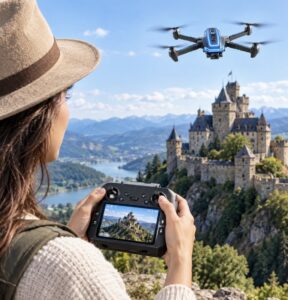
DJI Lito 1, 4K Camera Drone for Beginners Obstacle Sensing
The DJI Lito drone below weighs under 249g with a C0 certification, this compact drone features omnidirectional obstacle sensing and a 15km video transmission range to give beginners complete confidence in the air. Ready to fly with the DJI RC-N3 controller, it empowers creators to effortlessly capture cinematic 4K videos and 8K photos using precise ActiveTrack subject tracking. Go to this drone on Amazon.
#ad
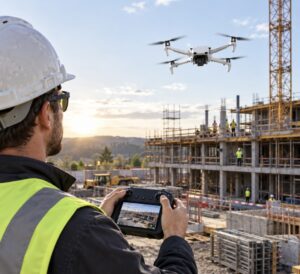
Ruko U11MINI 4K Drone with Camera
The Ruko drone shown below weighs under 249 grams for ultimate portability, this pocket-sized drone utilizes a 3-axis brushless gimbal and EIS stabilization to capture incredibly smooth 4K videos and 8K stills. It empowers creators to explore distant horizons with a massive 20,000-foot transmission range, hands-free cruise control, and three intelligent batteries providing up to 96 minutes of total flight time. Available in 4K 0r 8K photo. See more on Amazon
#ad
CHUBORY Drone with Camera 4K for Beginners
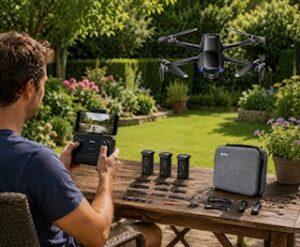
The Chubory drone shown below is registration-free, sub-249g foldable drone utilises powerful alloy brushless motors and three upgraded batteries to deliver up to 84 minutes of quiet, wind-resistant flight. It gives pilots the freedom to explore vast landscapes across an extended 2,650-foot control range while capturing flexible bird’s-eye shots using a 90° adjustable 4K wide-angle camera. See the CHUBORY Drone with Camera 4K for Beginners on Amazon
As an Amazon associate, I may earn from qualifying purchases.