
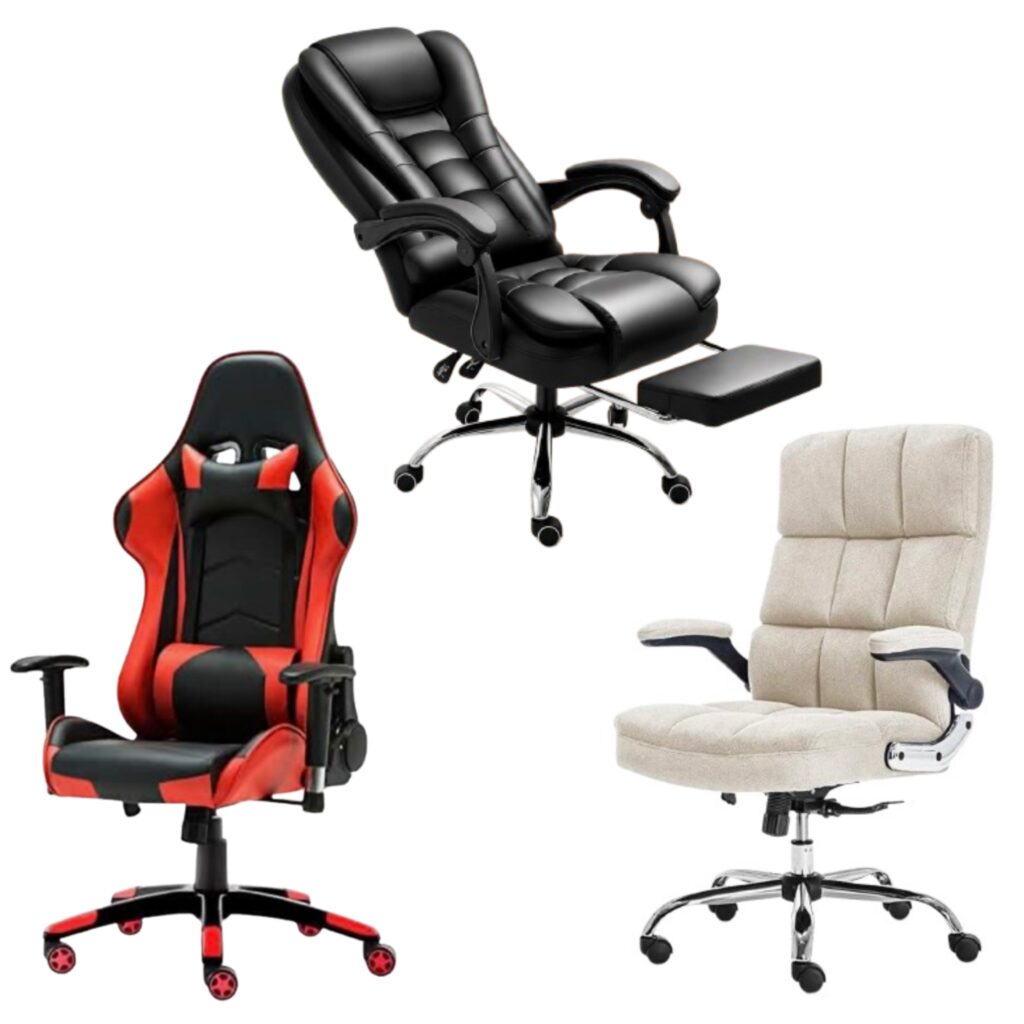
Compare Ergonomic Chairs
The single most unique and counter-intuitive secret to achieving comfort while working or gaming is that true ergonomic design is entirely about supporting movement, not enforcing stillness. Most people think an ergonomic chair is a rigid mould meant to freeze you in a single, “perfect” upright posture. In reality, the human body is built to move, and freezing yourself in one position, no matter how straight, restricts blood flow and causes fatigue. The best chairs are engineered for dynamic sitting, allowing you to naturally lean, rock, and fidget without losing critical support.
Many of us check a chair’s height and lumbar support, but seat depth adjustment is the absolute most vital, underrated feature for preventing lower-back pain. If a seat cushion is too long, it presses against the back of your knees, forcing you to slide your hips forward and completely lose contact with the backrest. A truly unique ergonomic setup lets you slide the seat pan back or forward until exactly two fingers fit between the edge of the cushion and your knees. This anchors your pelvis perfectly flush against the spine-tracking framework, completely eliminating mid-afternoon slouching.
When you transition from typing out an email to leaning back with a controller to play a game, your body’s geometry shifts. Cheap chairs tilt the seat and the backrest at the exact same angle, which lifts your feet off the floor and jams your knees upward. High-end ergonomic chairs utilize a synchronized tilt mechanism where the backrest reclines at a 2:1 ratio compared to the seat. This opens up your torso angle to breathe better and stimulate blood flow, while keeping your feet perfectly flat on the floor and your eyes perfectly levelled with your monitors.
Compare Ergonomic Chairs Read More »